It is 3 a.m., and you have flipped the pillow to the cool side for the fourth time tonight. If you keep waking up warm and sticky, the problem usually is not you. It is the heat trapped between your body and the surface you are lying on. The good news: learning how to keep a mattress cool rarely starts with buying anything. This guide ranks seven fixes from free to upgrade, so you spend money only after the cheap fixes run out. You will learn exactly which steps move the needle, which ones are a waste, and how to choose a sleep surface built to stay cool if it comes to that.
Quick Answer. The Cooling Ladder
To keep a mattress cool, start at the cheapest rung and climb only if you are still hot:
- Rung 1 (free): Drop the room to 60–67°F
- Rung 2 ($): Switch to breathable cotton, linen, or bamboo sheets
- Rung 3 ($): Add airflow underneath with a slatted base
- Rung 4 ($$): Add a gel or phase-change cooling topper
- Rung 5 ($$): Run a fan or a bed-cooling system
- Rung 6 ($): Lighten your sleepwear and bedding layers
- Rung 7 ($$$): Upgrade to a mattress built to sleep cool
Why Does a Mattress Get So Hot?
A mattress gets hot when heat from your body has nowhere to go. Your body sheds warmth all night, and if that heat cannot disperse into the air or escape beneath the bed, it builds up at the surface and radiates straight back at you. Three culprits cause most of it: dense foam with little ventilation, a solid base that blocks airflow underneath, and synthetic sheets that hold warmth in.
Memory foam has a reputation for sleeping warm for a reason. Its density makes it less breathable, and its body-hugging contour wraps around you, which reduces the open space where air would normally carry heat away. According to the Sleep Foundation, some pillow and mattress materials, including memory foam, can trap heat that feels uncomfortable for warm sleepers.
The fix is not always a new mattress. In practice, most heat complaints we hear from customers come down to airflow and bedding, not the mattress itself. That is why the order you tackle this in matters more than the products you buy.
The Cooling Ladder: 7 Fixes Ranked From Free to Upgrade
We call this the Cooling Ladder. The idea is simple: work from the bottom rung up, and stop as soon as you are comfortable. Most people never need the top rungs. Climbing in order means you never overpay to solve a problem a free fix would have handled.
1. Drop Your Bedroom to 60–67°F (Free)
The single most effective change costs nothing. Sleep researchers generally point to a bedroom temperature between 60 and 67 degrees Fahrenheit as the sweet spot. A warm room forces your mattress to soak up ambient heat on top of your body heat, so cooling the room cools the bed by extension. Set the thermostat, crack a window, or run the AC an hour before bed.
2. Switch to Breathable Sheets (Low Cost)
Your sheets sit between you and the mattress. Cotton, linen, or bamboo with a lower thread count let heat escape — polyester and microfiber hold it in. A quick swap if you have not already done it.
3. Add Airflow Underneath With a Slatted Base
This is the fix most people skip, and it is one of the best. A slatted bed base lets air circulate beneath the mattress so warm, moist air escapes instead of pooling underneath. A solid platform or a mattress on the floor traps that heat. Aim for slats spaced two to three inches apart. If your frame is solid, even a slatted bunkie board or bed risers for ground clearance will help.
4. Add a Cooling Topper ($$)
If the first three rungs are not enough, a gel or phase-change topper pulls heat from the surface for the first few hours. Treat it as a surface fix — it cannot address heat trapped deep in the foam or a mattress that is already sagging.
5. Add a Fan or Bed-Cooling System ($$)
Moving air carries heat away faster than still air. A ceiling or pedestal fan is the cheap version and works well for most people. For heavy sweat or hot flashes, a forced-air or water-based bed-cooling system actively chills the surface and is the strongest option short of a new mattress.
6. Lighten Your Bedding Layers (Low Cost)
Heavy pajamas and stacked blankets undo every rung below. Strip down to one breathable layer in warm months and you have eliminated a significant heat source before spending anything.
7. Upgrade to a Mattress Built to Sleep Cool (The Last Rung)
If you have climbed every rung and still sleep hot, the mattress itself is the bottleneck. A sleep surface engineered with active cooling — gel-infused foam, copper-infused covers, or phase-change layers — solves at the source what toppers only patch at the surface. This is the last rung for a reason: it is the priciest, and most people fix their heat problem before they reach it. When you do need it, look at our full mattress collection and filter for the cooling models.
Cooling Mattress Topper vs. a Cooling Mattress: Which Is Worth It?
A cooling topper is the right call when your mattress is otherwise comfortable and only the surface runs warm. A cooling mattress is the right call when the bed traps heat in its core, sags, or is already near the end of its life. Here is how they compare on the factors that matter.
| Factor | Cooling Topper | Cooling Mattress |
|---|---|---|
| Upfront cost | Low ($) | Higher ($$$) |
| How long it cools | First few hours | All night |
| Fixes deep-layer heat | No | Yes |
| Adds support | Minimal | Yes |
| Best for | A good mattress that runs warm | An old or heat-trapping mattress |
| Lifespan | 2–4 years | 7–10 years |
The honest answer: if your mattress is under five years old and supportive, start with a topper. If it sags or you wake up warm no matter what you try, a topper is money spent twice — put it toward a mattress that sleeps cool from the inside out.
What Makes a Mattress Sleep Cool?
A mattress sleeps cool when its materials actively move heat away from your body instead of trapping it. Regular memory foam is dense and closed-cell — body heat builds at the surface with nowhere to go. Purpose-built cooling mattresses use different layers to solve this at the source. Here is how each one works.
Gel-Infused Foam
Gel beads or a gel swirl embedded in foam increase its thermal mass — the foam absorbs the heat you generate and distributes it through the layer rather than letting it concentrate at your skin. An active cooling gel layer (like the one in the Ground Pro™) goes further: the gel is formulated to continuously pull heat away through the night, not just buffer it for the first hour.
Latex Foam
Latex has a naturally open-cell structure, meaning the foam itself is full of tiny interconnected air pockets rather than the closed cells of memory foam. Many latex layers are also pin-cored — small vertical channels are punched through the foam — which creates direct air pathways. Every time you shift position, air moves through those channels and carries heat away. Latex also does not contour tightly around your body the way memory foam does, so there is always a gap for airflow between the foam and your skin. This is why latex consistently outperforms standard memory foam on sleep temperature.
Copper-Infused Materials
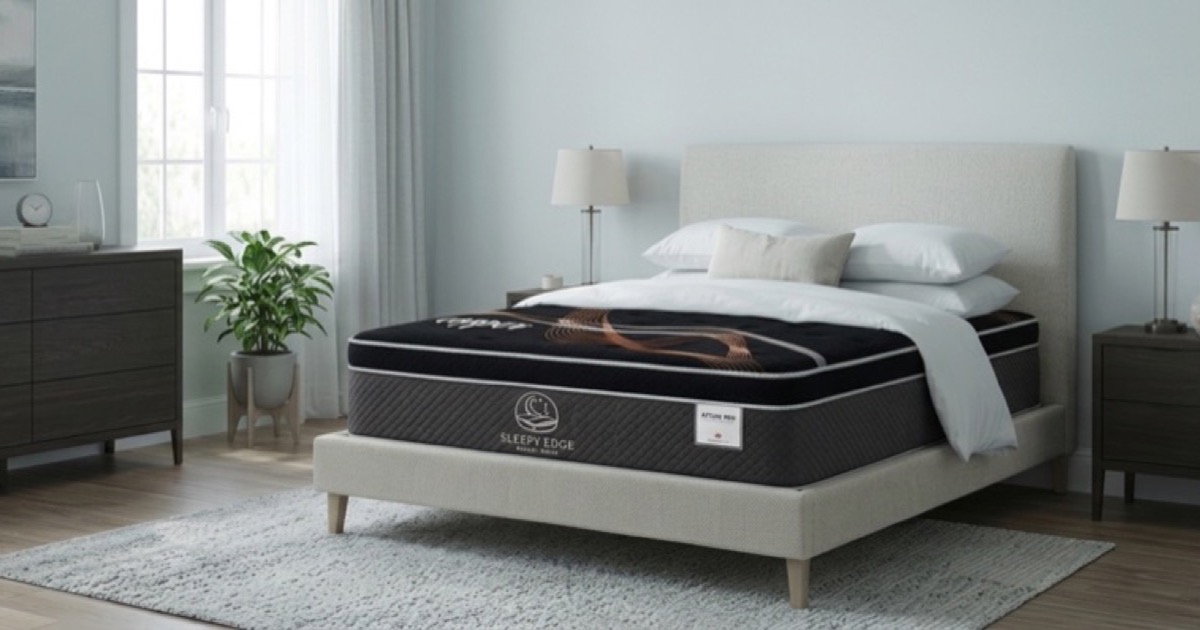
Copper is one of the best heat conductors found in nature — it moves heat roughly 3,000 times more effectively than foam. When copper is infused into a comfort layer or cover fabric, it creates a conductive pathway that draws warmth away from your skin and disperses it through the mattress rather than letting it pool at the surface. Our Attune™ and Attune Pro™ both use copper-infused covers for this reason: the heat moves on contact, before it has a chance to build up.
Phase-Change Materials (PCM)
Phase-change materials are engineered to absorb large amounts of heat as they transition between states — similar to how ice absorbs heat as it melts. At body temperature, PCM layers activate and draw heat away from your skin. When the material cools back down, it releases that stored heat into the mattress rather than back at you. The result is more consistent surface temperature through the night, even after the first couple of hours when simpler gel layers have already reached thermal equilibrium.
Here is how the SleepyEdge mattresses apply these technologies and who each one is built for:
| Mattress | Cooling Technology | Best For |
|---|---|---|
| Ground Pro™ | Active cooling gel layer draws heat away all night | Hot sleepers who want the strongest cooling value |
| Attune Pro™ | Copper-infused cover + pressure-relief foam | Warm sleepers who want a plush, contouring feel that still sleeps cool |
| Attune™ | Copper-infused breathable cover | Side sleepers who run warm and want targeted pressure relief |
The Ground Pro™ active cooling gel layer is the most direct answer for hot sleepers — it draws heat continuously rather than just buffering it at the surface. For a softer feel that still handles heat, the Attune Pro™ copper-infused cooling moves heat on contact across the full surface. Every SleepyEdge model uses CertiPUR-US certified foams and ships with a 120-night sleep trial so you can test how cool it sleeps in your own bedroom before committing.
How to Keep a Memory Foam Mattress Cool
Memory foam runs warm because it is dense and wraps around you, but you can cool it down without replacing it. Work through these steps in order:
- Lower the room to 60–67°F so the foam is not absorbing extra heat from the air.
- Move the mattress onto a slatted base so air circulates beneath the foam and warm air escapes.
- Add a gel or phase-change topper to put a breathable layer between you and the dense foam.
- Switch to cotton, linen, or bamboo sheets and drop the thread count for a more open weave.
- Run a fan to keep air moving across the surface all night.
In practice, the slatted base and the room temperature do most of the work. If you have done all five and still wake up hot, the foam itself is holding heat, and that is the signal to look at a mattress with active cooling built in.
The Bottom Line
Most heat problems are solved on the lower rungs — a cooler room, breathable sheets, and airflow under the bed — long before you need to spend on a topper or a new mattress. Climb the ladder in order and stop when you are comfortable. If you reach the top rung, the Ground Pro™ is built to sleep cool from the core out.
Shop the Ground Pro™ →Frequently Asked Questions
Why does my mattress get so hot at night?
A mattress feels hot when heat from your body has nowhere to escape. Dense foam without ventilation, a solid bed base that blocks airflow underneath, and synthetic sheets that trap warmth all combine to hold heat against your skin instead of letting it disperse into the room.
Do cooling mattress toppers really work?
Yes, a quality cooling topper helps, but it is a partial fix. Gel-infused foam and phase-change toppers pull heat away from the surface for a few hours. They cannot fix a mattress that traps heat in its deeper layers, so a topper works best alongside a slatted base and breathable bedding.
Does a slatted bed frame keep a mattress cooler?
Yes. A slatted base lets air circulate beneath the mattress so warm, moist air can escape rather than pool underneath. A solid platform or box without gaps traps that heat. Switching to slats spaced two to three inches apart is one of the cheapest ways to keep a mattress cool.
What is the best mattress for hot sleepers?
The best mattress for hot sleepers uses active cooling materials such as gel-infused foam, copper-infused covers, or phase-change layers, paired with a breathable, open construction. The SleepyEdge Ground Pro™ features an active cooling gel layer, and the Attune Pro™ uses copper-infused cooling for warmer rooms.
What temperature should my bedroom be for sleep?
Sleep researchers generally recommend a bedroom temperature between 60 and 67 degrees Fahrenheit. A cooler room helps your body settle in for the night and stops your mattress from absorbing extra warmth from the air around it. It is the first and cheapest fix to try.
How do I make a memory foam mattress cooler without buying anything?
Lower your bedroom to 60–67 degrees, pull back heavy blankets, run a fan for airflow, and lift the mattress onto a slatted base if you have one. These free or near-free steps solve most heat complaints before you spend a cent on toppers or a new mattress.