Mattress thickness is one of the easiest specs to compare and one of the easiest to misread. A taller mattress is not automatically firmer, softer, or better; it simply has room for more layers. This guide explains what each common height from 6 to 14 inches is built for, how to choose by body weight and sleep position, and the part most buyers forget until delivery day: how your mattress, frame and sheets add up to the height of the bed you actually live with. You will get a to-scale chart, a quick decision table, and the measurements to check before you order.
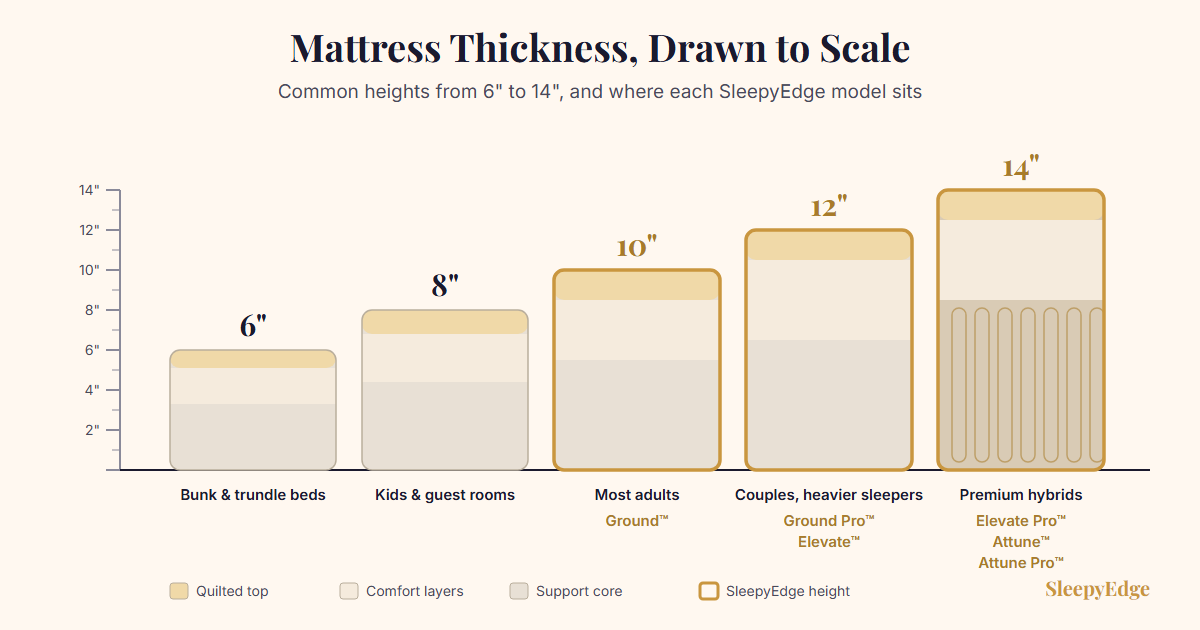
Quick Answer. How Thick Should a Mattress Be?
Most adults are best served by a mattress between 10 and 14 inches thick:
- 6" to 8": bunk beds, trundles, daybeds, and occasional guest use
- 10": single adults of average weight who like a firmer, stable feel
- 12": couples, heavier sleepers, and anyone who wants more cushioning
- 14": premium hybrids with deep comfort layers, strong edges, and a taller look
Then check your frame: the mattress plus the frame should put the top of the bed roughly level with your knees when you sit on the edge.
Mattress Thickness Chart: What Each Height Is For
Mattress height is measured from the bottom of the mattress to the top of its cover, and nearly every mattress sold today lands between 6 and 14 inches. Within that range, each step up adds space for something: a thicker comfort layer, an extra transition layer, or a pocket coil support system in place of a solid foam core. Here is what you can generally expect at each height.
| Thickness | Typical construction | Best for |
|---|---|---|
| 6" to 8" | One thin comfort layer over a foam core | Bunk and trundle beds, daybeds, children, occasional guests |
| 10" | A real comfort layer over a high-density foam core | Single adults of average weight, firmer-feel preferences |
| 12" | Deeper or multiple comfort layers; all-foam or hybrid | Couples, heavier sleepers, combination sleepers |
| 14" | Quilted top, several comfort layers, pocket coil support | Side sleepers, couples, anyone wanting a premium hybrid |
| 15"+ | Extra pillow-top or euro-top layers | Very plush preferences; check frame height and sheets first |
What Mattress Thickness Does (and Doesn't) Tell You
Every mattress is two things stacked together: comfort layers on top, which shape how the surface feels, and a support core underneath, which keeps the mattress from sagging. Thickness tells you how much room there is for both. It does not tell you how they feel.
That is the most common misunderstanding about mattress height: thickness is not firmness. A 14-inch hybrid can be medium-firm, and a 10-inch all-foam mattress can be firm. SleepyEdge's own lineup shows it: the 12-inch Ground Pro™ is our firmest model, while the 12-inch Elevate™ is one of our softest. Compare the feel rating and the layer list, not just the number of inches. Our mattress materials guide explains what each layer type does.
What extra thickness reliably adds is depth. Deeper comfort layers take longer to compress all the way through, which matters more the heavier the sleeper and the more weight is concentrated on the shoulders and hips. Taller mattresses are also more likely to use a pocket coil system, which adds airflow and a firmer perimeter for sitting on the edge of the bed.
How to Choose the Right Mattress Thickness
Work through these three factors in order. Most people have their answer by the second one.
1. Body weight
Weight is the biggest single factor, because it decides how far you sink into the comfort layers.
- Under about 130 lbs: you sink less, so a 10-inch mattress usually gives plenty of comfort depth.
- About 130 to 230 lbs: anything from 10 to 14 inches works; choose by sleep position and feel.
- Over about 230 lbs: look for 12 inches or more, ideally with pocket coils, so the comfort layers don't bottom out and the edges stay supportive.
2. Sleep position
Side sleepers press their shoulders and hips into a small area of the mattress, so they tend to appreciate the deeper cushioning of a 12- to 14-inch build. Back and stomach sleepers spread their weight more evenly and often prefer a firmer surface, which a 10- or 12-inch mattress delivers well. Combination sleepers who change positions through the night generally do best in the middle, at 12 inches with a medium-firm feel.
3. Who shares the bed
Two people double the weight on the mattress and spend more time near the edges. Couples usually benefit from 12 inches or more, and from a pocket coil hybrid in particular: individually wrapped coils limit motion transfer between partners, and a reinforced perimeter keeps the full width of the bed usable.
Mattress Height vs. Bed Height
The number on the product page is only part of how high your bed will be. Total bed height is your frame or foundation plus your mattress, and it changes how easy the bed is to sit on, climb into, and make every morning.
A common rule of thumb: sit on the edge of the bed, and your feet should rest flat on the floor with your knees roughly level with your hips. For many adults, that puts the top of the mattress about 20 to 25 inches off the floor. Taller people often prefer a little higher, shorter people a little lower.
| Base | Typical height | With a 10" mattress | With a 14" mattress |
|---|---|---|---|
| Low-profile platform frame | About 5"–10" | About 15"–20" | About 19"–24" |
| Standard platform frame | About 10"–14" | About 20"–24" | About 24"–28" |
| Bed frame + box spring or foundation | About 14"–18" | About 24"–28" | About 28"–32" |
The takeaway: a 14-inch mattress pairs best with a low-profile or standard platform frame. Put it on a tall frame with a full-height foundation and the bed can climb past 30 inches, which looks dramatic but can feel like climbing into a hotel bed every night. A 10-inch mattress on a low frame can sit lower than many people expect, so a standard-height frame often suits it better.
Support matters as much as height
Whatever frame you choose, it has to support the mattress properly. For Queen and King mattresses, that means a rigid center support with legs that reach the floor. This is not just good practice: the SleepyEdge 10-year warranty requires an appropriate frame with center support on Queen and King sizes, and damage from an incorrect or mismatched foundation is not covered. If you are reusing an older frame, check it before your new mattress arrives.
Bunk beds, trundles and daybeds
These are the one place where thinner is the rule, not a compromise. Bunk bed makers list a maximum mattress thickness for a safety reason: US bunk bed safety rules require the top of the guardrail to sit at least 5 inches above the surface of the thickest mattress the maker specifies, and a mattress thicker than that cuts into the margin. Trundles and daybeds have their own height limits so they can slide or fold. Always follow the maker's instructions for maximum mattress thickness.
Getting the Right Sheets for a Thick Mattress
The other thing a thicker mattress changes is your bedding. Fitted sheets are sold by pocket depth, the height of the side panel, and a sheet that is too shallow will pop off the corners overnight.
- Measure first: measure your mattress from bottom seam to the top of the cover, then add the thickness of any mattress protector or topper.
- Add two to three inches: choose a pocket depth that much deeper than the total, so the elastic tucks under the mattress.
- For a 14-inch mattress: look for a pocket depth of 16 to 18 inches, often labeled "deep pocket". Labels vary between brands, so check the inch measurement rather than the name. Standard sheets, usually made for mattresses up to about 12 inches, are fine for a 10-inch mattress.
Thicker mattresses also look best with a fitted sheet and protector that match their height, since a tight fit keeps the surface smooth and the quilting visible.
How Thick Are SleepyEdge Mattresses?
Every SleepyEdge mattress is between 10 and 14 inches thick and comes in Twin, Double (Full), Queen and King. Here is how height, construction and feel line up across the collection.
| Model | Height | Construction | Feel | Best for |
|---|---|---|---|---|
| Ground™ | 10" | All-foam | Medium-firm (7/10) | Back and stomach sleepers, firmer comfort preferences |
| Ground Pro™ | 12" | All-foam | Firm (8/10) | Hot sleepers, back sleepers, combination sleepers |
| Elevate™ | 12" | Latex hybrid, euro top | Medium (6/10) | Sleepers who prefer a softer, more luxurious feel |
| Elevate Pro™ | 14" | Latex hybrid, euro top | Medium-firm (6.5/10) | Luxury-focused sleepers, hot sleepers, couples |
| Attune™ | 14" | Copper-cooling hybrid | Medium (6/10) | Side sleepers, combination sleepers, pressure-sensitive sleepers |
| Attune Pro™ | 14" | Copper-cooling hybrid | Medium-firm (6.5/10) | Side sleepers, couples, sleepers seeking premium contouring |
If you sleep alone, weigh under about 230 pounds and like a firmer surface, the 10-inch Ground™ is a straightforward fit on a standard frame. Couples and side sleepers usually land on one of the 14-inch hybrids: the Elevate Pro™, our pick, for a medium-firm euro-top feel with the highest cooling rating in the collection, or the Attune™ for closer, adaptive contouring. Every model ships with a 120-night sleep trial, so you can check the height on your own frame before you commit.
Common Mattress-Height Mistakes to Avoid
- Assuming thicker means softer (or firmer). Thickness is room for layers; the feel rating tells you how it actually sleeps.
- Forgetting the frame. Add your frame or foundation height to the mattress height before you order, especially with a 14-inch model.
- Reusing a frame without center support. Queen and King mattresses need a rigid center support with legs to the floor, both for even support and to keep your warranty valid.
- Keeping your old sheets. Sheets that fit a 9- or 10-inch mattress often will not stay on a 14-inch one. Check the pocket depth.
- Going over a bunk bed's limit. On bunks, trundles and daybeds, the maker's maximum thickness is a safety limit, not a suggestion.
The Bottom Line
For most adults, the right mattress is 10 to 14 inches thick: 10 inches for single sleepers who like a firmer feel, 12 inches for couples and heavier sleepers, and 14 inches for anyone who wants a premium hybrid with deep comfort layers. Remember that thickness is not firmness, then check the two things that come with height: a frame that puts the bed at a comfortable sitting height with proper center support, and sheets deep enough to fit.
Compare Every SleepyEdge Model →Frequently Asked Questions
Is a thicker mattress better?
Not automatically. Extra thickness usually means deeper comfort layers or a coil system, which suits heavier sleepers, couples and side sleepers who want more cushion. It does not make a mattress firmer or softer on its own, and a very tall mattress can make a bed awkwardly high. The right thickness is the one that matches your body weight, sleep position and frame.
Is a 10-inch mattress thick enough for an adult?
For most single adults, yes. A well-built 10-inch mattress has room for a real comfort layer over a supportive core, which is plenty for back and stomach sleepers of average weight who like a firmer feel. Couples, heavier sleepers and side sleepers who want deeper cushioning usually prefer 12 inches or more.
How thick should a mattress be for a heavier person?
Sleepers over about 230 pounds generally do best on a mattress of 12 inches or more. The extra height leaves room for thicker comfort layers that do not compress all the way through, and a pocket coil support system adds stronger edge support for sitting and getting in and out of bed.
What pocket depth sheets do I need for a 14-inch mattress?
Choose fitted sheets with a pocket depth of at least 16 inches for a 14-inch mattress, and closer to 18 inches if you add a mattress protector or topper. A pocket that is only as deep as the mattress tends to pop off the corners, so aim for two to three inches of extra depth.
How high should a bed be from the floor?
A common rule of thumb is that when you sit on the edge of the bed, your feet should rest flat on the floor with your knees roughly level with your hips. For many adults that puts the top of the mattress about 20 to 25 inches off the floor. Add your frame or foundation height to your mattress height to check where yours will land.
Can I put a thick mattress on a bunk bed?
Only up to the maximum thickness the bunk bed maker specifies. US bunk bed safety rules require the top of the guardrail to sit at least 5 inches above the mattress surface, so a mattress that is too thick reduces that protection. Always follow the label on the bed.