Some people can sleep through a thunderstorm on a scratchy sofa. Many of us cannot. A sliver of light under the door, a tag in a pillowcase, a partner rolling over or a room that is a few degrees too warm is enough to keep us aware of the room instead of drifting off. A sensory-friendly bedroom is simply one where you control those details. This guide works through the room one sense at a time, light, sound, temperature, touch, smell and movement, with practical changes for each and the research or official guidance behind them. You do not need to do everything; start with whatever bothers you most.
Quick Answer. How Do You Make a Bedroom Sensory-Friendly?
Work through each sense and remove what you notice at night:
- Light: blackout curtains, covered device lights, and dim, warm lamps in the evening
- Sound: soften the room with rugs and curtains, seal gaps, and fix squeaks
- Temperature: keep the room on the cool side and choose breathable layers you can add or remove
- Touch: pick sheet fabrics and a mattress surface you like the feel of, and remove tags and rough seams
- Smell and air: air out new bedding and choose certified low-emission foams
- Movement: a mattress that keeps a partner's motion from traveling across the bed
What "Sensory-Friendly" Means
Everyone has sensory preferences. Some people want total darkness, others want a nightlight. Some love a heavy duvet, others kick off everything but a sheet. A sensory-friendly bedroom is not one specific look; it is a room set up around what you notice, so that very little competes for your attention once the lights are off.
The approach is the same for everyone: lie in bed for a minute with your eyes open, then closed, and notice what you can see, hear, feel and smell. Anything that catches your attention is a candidate for one of the changes below.
Light: Darker in the Evening, Darker at Night
Light is the sense most people underestimate. Your body uses light as a signal for time of day, and ordinary indoor lighting is bright enough to affect it. In a study of 116 healthy adults, being in typical room light (under 200 lux) in the hours before bed, compared with dim light, delayed the onset of melatonin, a hormone linked to the body's nighttime signal, in nearly every participant and shortened its duration by about 90 minutes.[3]
- Dim the evening: switch to low, warm-toned lamps for the last hour or two before bed instead of bright overhead lights.
- Block outside light: blackout curtains or a blackout liner behind your existing curtains handle streetlights and early sunrises.
- Cover the small lights: charger LEDs, TV standby lights and smoke-detector indicators are surprisingly bright in a dark room. Turn devices to face away, or cover their lights with a small piece of opaque tape (never cover a smoke detector itself).
- Need some light? A very dim, warm nightlight placed low near the floor is less noticeable than an overhead or bedside light.
Sound: Quiet the Room, Then the Bed
Night-time noise is a recognized sleep disturber. The World Health Organization's environmental noise guidelines recommend keeping road-traffic noise at night below 45 decibels (measured outside the home) to limit its effects on sleep.[4] You cannot move the road, but you can reduce how much of it reaches you:
- Soften hard surfaces: rugs, heavy curtains, upholstered headboards and a full bookshelf all absorb sound that bare floors and walls reflect.
- Seal the gaps: a draft stopper under the door and weatherstripping around windows cut a surprising amount of outside noise.
- Fix the squeaks: creaks are usually the bed frame, slats or a loose headboard bolt rather than the mattress. Tighten hardware and put felt pads where wood meets wood or metal.
- Earplugs: soft foam earplugs are the cheapest way to test whether sound is what is waking you.
What about white noise?
White noise machines are popular, but the evidence is weaker than their reputation. A 2021 systematic review of 38 studies rated the evidence that continuous noise improves sleep as very low quality, with results ranging from better sleep to more disrupted sleep.[5] If you like a steady background sound, keep it at a low, comfortable volume. If you are not sure, start by reducing outside noise instead.
Temperature: Cool Room, Breathable Layers
Being too warm is one of the most common reasons people lie awake or wake up during the night. A review of research on sleep and the thermal environment found that heat or cold exposure tends to increase wakefulness, and that in real bedrooms, where people sleep with bedding and clothing, heat disrupts sleep more than cold, especially when it is also humid.[1]
- Start cool: set the thermostat a little cooler at night and add or remove layers, rather than heating the whole room to suit the warmest moment.
- Layer instead of one heavy duvet: a sheet, a light blanket and a duvet you can fold back lets you adjust without getting up.
- Watch the humidity: in humid weather a fan or dehumidifier makes the same temperature feel noticeably cooler.
- Mind the fabric: what you wear to bed matters too. In one small lab study of 17 adults, the fabric of their sleepwear made a measurable difference to how quickly they fell asleep, while bedding fabric did not.[2]
Your mattress plays a part as well, since you are lying on it all night. Our guide on how to keep a mattress cool covers bedding, toppers and the mattress features that help a bed sleep cooler.
Touch and Texture: What's Against Your Skin
Texture is personal, and it is the sense you are in contact with for the whole night. A few things are worth checking:
- Sheet weave: percale cotton feels crisp and cool, sateen feels smooth with a slight sheen, and jersey knit feels soft and stretchy like a T-shirt. If you are not sure, buy one set to try before replacing everything.
- Seams and tags: cut tags off pillowcases and duvet covers, and look for sheets with flat, finished hems.
- Weight on top: some people find a heavier blanket comfortable and others feel trapped under one. Try a heavier quilt or doubled blanket before buying anything specialized. Weighted blankets are for older children and adults only; US safety officials warn that weighted blankets, swaddles and sleep sacks are not safe for infant sleep.[7]
- The mattress surface: even under a sheet, you can feel whether a mattress top is smooth and tight or plush and quilted. Neither is better; it comes down to which you prefer.
Smell and Air: Fresh, Not Fragranced
Strong scents, from air fresheners to scented detergents, are easy to stop noticing during the day and hard to ignore in a dark, quiet room. If smell bothers you, switch to fragrance-free laundry products, keep the room ventilated, and let new bedding air out before you use it.
A faint new-product smell is normal when a foam mattress is first unboxed and usually fades within a few days with good airflow. Open a window, run a fan and leave the mattress uncovered for a few hours if you can. When you compare mattresses, look for foams certified by CertiPUR-US: certified foams are made without formaldehyde, ozone depleters or heavy metals such as mercury and lead, and are tested for low VOC (volatile organic compound) emissions for indoor air quality, below 0.5 parts per million.[6]
Movement: Keep a Partner's Motion on Their Side
If you share a bed, the biggest sensory disruption may not be the room at all, but someone else turning over, getting up or climbing in late. Two mattress features matter most here:
- Motion isolation: foam absorbs movement, and pocket coils are individually wrapped so each one moves on its own, rather than as one connected unit like a traditional innerspring.
- Quiet construction: an all-foam mattress has no springs to make a sound, and wrapped pocket coils are quiet too. Older open-coil innersprings are the most likely to creak.
- Edge support: a firm perimeter means getting in and out of bed does not tilt the whole surface toward the edge.
For couples, size helps as much as construction. Our mattress size guide walks through choosing a width that leaves room for two sleepers.
What to Look for in a Mattress
Bring the senses together and the mattress questions get simpler: do you prefer a smooth or a plush surface, do you need motion isolation for a partner, and do you tend to sleep warm? Here is how the SleepyEdge collection lines up. Every model uses CertiPUR-US certified foams and a polyester fire barrier, with no fiberglass.
| Model | Surface feel | Construction | Feel | Best for |
|---|---|---|---|---|
| Ground™ | Smooth, stretched cool-fabric cover | All-foam | Medium-firm (7/10) | Back and stomach sleepers, firmer comfort preferences |
| Ground Pro™ | Smooth, stretched cool-fabric cover | All-foam with cool gel memory foam | Firm (8/10) | Hot sleepers, back sleepers, combination sleepers |
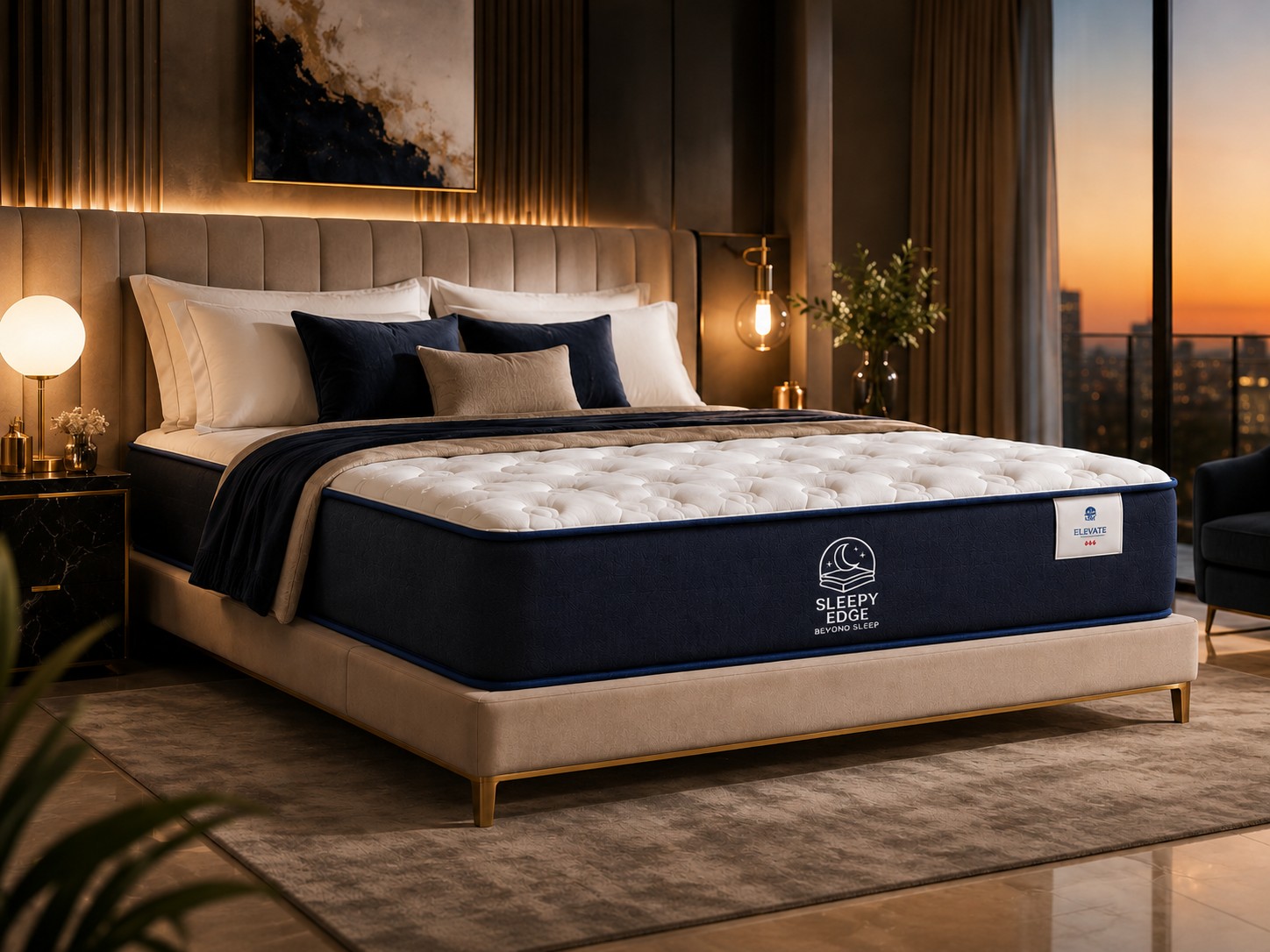
| Elevate™ | Plush quilted euro top | Latex hybrid, 5-zone pocket coils | Medium (6/10) | Sleepers who prefer a softer, more luxurious feel |
| Elevate Pro™ | Plush quilted euro top | Latex hybrid, 5-zone pocket coils | Medium-firm (6.5/10) | Luxury-focused sleepers, hot sleepers, couples |
| Attune™ | Quilted copper-fabric top | Copper-cooling hybrid, 5-zone pocket coils | Medium (6/10) | Side sleepers, combination sleepers, pressure-sensitive sleepers |
| Attune Pro™ | Quilted copper-fabric top | Copper-cooling hybrid, 5-zone pocket coils | Medium-firm (6.5/10) | Side sleepers, couples, sleepers seeking premium contouring |
If you prefer a smooth, tight surface and a bed with no springs at all, the all-foam Ground™ and Ground Pro™ are the simplest choices, and Ground Pro™ adds cool gel memory foam for warm sleepers. If you like a softer, cushioned top and share the bed, the Elevate Pro™, our pick, pairs a plush euro top with wrapped pocket coils and the highest cooling rating in the collection. Texture is hard to judge from a description, which is exactly what the 120-night sleep trial is for.
Your Sensory-Friendly Bedroom Checklist
- Lie in bed and take an inventory. Note what you can see, hear, feel and smell with the lights off.
- Make it dark. Blackout curtains, covered device lights, warm and dim lamps in the evening.
- Make it quiet. Rugs and curtains, a draft stopper, tightened bed hardware.
- Keep it cool. A slightly cooler thermostat and layers you can adjust from bed.
- Choose fabrics you like the feel of. Sheets, sleepwear and the mattress surface itself.
- Clear the air. Fragrance-free laundry, good ventilation, certified low-emission foams.
- Contain the motion. If you share the bed, prioritize motion isolation and a size with room for both of you.
The Bottom Line
A sensory-friendly bedroom is less about buying special products and more about removing what you notice at night. Make the room dark, quiet and slightly cool, choose fabrics and a mattress surface you enjoy touching, keep the air fresh, and stop a partner's movement from reaching your side of the bed. Change one thing at a time, so you can tell what actually makes the difference for you.
Compare Every SleepyEdge Model →Frequently Asked Questions
What makes a bedroom sensory-friendly?
A sensory-friendly bedroom keeps the things you notice at night under your control: light, sound, temperature, the feel of fabrics, smells and movement. In practice that usually means a dark, quiet, slightly cool room with bedding and a mattress surface you find comfortable to touch, and as few surprises as possible once the lights are off.
Does white noise help you sleep?
The research is not settled. A 2021 systematic review of 38 studies rated the evidence that continuous noise improves sleep as very low quality, with results ranging from better to more disrupted sleep. If you like a steady background sound, keep it at a low, comfortable volume; if you do not, reducing outside noise with curtains, rugs and sealed gaps is the more reliable first step.
What type of mattress is quietest?
An all-foam mattress has no springs, so it makes almost no sound when you move. Pocket coil hybrids are also quiet because each coil is wrapped in fabric and moves on its own, rather than as one connected unit like a traditional innerspring. If a bed squeaks, the frame, slats or foundation are often the source, so check those before blaming the mattress.
How long does new mattress smell last?
A faint new-product smell is normal when a foam mattress is first unboxed and usually fades within a few days with good airflow. Open a window, run a fan and leave the mattress uncovered for a few hours if you can. Choosing foams certified by CertiPUR-US means they have been tested for low VOC emissions.
Are weighted blankets safe for babies?
No. US safety officials warn that weighted blankets, swaddles and sleep sacks are not safe for infant sleep. Keep weighted bedding out of cribs and talk to a pediatrician before using any product that claims to help a baby sleep.
Sources
- Okamoto-Mizuno K, Mizuno K. Effects of thermal environment on sleep and circadian rhythm. Journal of Physiological Anthropology, 2012;31:14.
- Shin M, Halaki M, Swan P, et al. The effects of fabric for sleepwear and bedding on sleep at ambient temperatures of 17°C and 22°C. Nature and Science of Sleep, 2016.
- Gooley JJ, et al. Exposure to room light before bedtime suppresses melatonin onset and shortens melatonin duration in humans. Journal of Clinical Endocrinology & Metabolism, 2011;96(3):E463–E472.
- World Health Organization Regional Office for Europe. Environmental Noise Guidelines for the European Region.
- Riedy SM, et al. Noise as a sleep aid: a systematic review. Sleep Medicine Reviews, 2021;55:101385.
- CertiPUR-US. CertiPUR-US certified foam criteria.
- US Consumer Product Safety Commission, Commissioner Richard Trumka. Beware: Weighted Infant Swaddles and Blankets Are Unsafe for Sleep.
This guide is general information about bedroom comfort, not medical advice. If you have ongoing trouble sleeping, talk to a healthcare professional.