Run your hand along the top edge of a mattress and you can usually name its top in a couple of seconds. A pillow top has a seam set back from the edge, with a soft panel resting on the bed like a cushion. A euro top meets the sides in a straight, squared-off corner. A tight top has no added layer at all, just a cover pulled smooth over the foam beneath. The difference looks cosmetic, but it shapes how the bed feels the moment you lie down, how tall it stands, which sheets fit, and how the surface changes over the years. This guide puts the main types side by side, shows you how to spot each one, and helps you decide which suits the way you sleep.
The Quick Answer: Euro Top vs. Pillow Top vs. Tight Top
- Tight top: the cover is stretched directly over the comfort layers, with no extra padding sewn on. It feels smooth and even, and adds the least height.
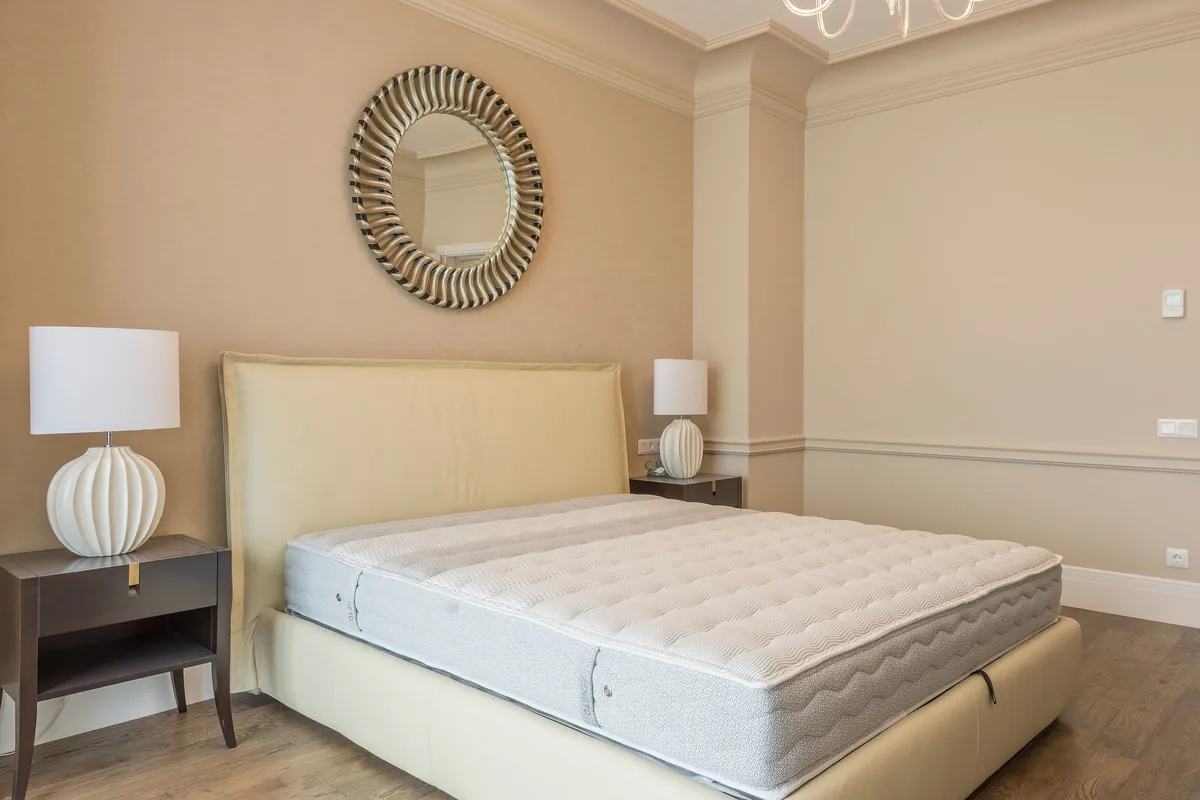
- Euro top: an extra cushioned layer is built in under the cover and sewn flush with the sides, giving straight edges and a plush, even surface.
- Pillow top: an extra cushioned panel is sewn onto the top of the mattress, with a visible seam or gap between it and the mattress body.
- Quilted: not a separate type. It describes a cover with padding stitched in, and a tight, euro, or pillow top can be quilted.
- What it changes: the top sets the first feel, the height, and the sheet size you need. Support comes from the core underneath, so judge the two separately.
The Three Standard Mattress Tops, Explained
Every mattress has a cover, and most have some cushioning between that cover and the main comfort layers. What sets the types apart is how much cushioning there is and how it is attached. If you are earlier in the process and still weighing size, feel, and materials, our step-by-step guide to choosing a mattress covers the bigger picture; this article zooms in on the surface.
Tight top
A tight top is the simplest build. The cover, often a stretch-knit fabric, is pulled snugly over the foam or latex below, and nothing extra is sewn on top. Lie on one and you feel the comfort layers almost directly: the surface is flat, uniform, and responsive. Tight tops are common on all-foam beds and on many mattresses shipped in a box, because there is no loose fill to shift during compression.
Euro top
A euro top adds a distinct cushioning layer, but builds it in under the cover and stitches it level with the side panels. The result is a squared-off edge and a plush surface that stays even from one side of the bed to the other. Because the extra layer is enclosed by the border, the corners tend to hold their shape, and the bed looks like one tall, tidy block.
Pillow top
A pillow top is a separate padded panel sewn onto the surface of the finished mattress. You can see the seam a little in from the edge, and the panel often bulges slightly over it, which is where the name comes from. Pillow tops tend to use loftier, looser fill, so the first contact is soft and sinking. The trade-off is that the panel can compress at the edges and along that seam.
Where "quilted" fits in
You will often see "quilted" in a product name, as in "quilted top" or "quilted euro top." Quilting is a way of finishing the cover, not a fourth type of top. Thin padding (usually polyester fiber, a little foam, or both) is stitched through the fabric in a pattern, which gives the surface its puffy, channeled look. A tight top can have a lightly quilted cover that softens the first touch without adding a separate layer, and euro and pillow tops are usually quilted too. When a listing just says "quilted top," check the edge and the layer list to see which of the three it really is.
Other labels, such as "plush top," "box top," or "luxury top," work the same way. None of these labels are standardized, and two brands can use the same word for different builds. How the top is attached tells you more than what it is called.
How to Spot Each Top in a Store or Online
You do not need a cutaway diagram to identify a top. Four quick checks cover almost every mattress:
- Look at the edge from the side. A clean right angle where the surface meets the side panel means a tight top or a euro top; the pinch test below tells those two apart. A seam set in from the edge, with padding sitting on top of it, means a pillow top.
- Press the corner with your palm. A pillow top's corner usually squashes easily because the soft panel overhangs the seam. A euro top is boxed in by the side panel, so the corner springs back with a more defined shape.
- Pinch the surface. On a tight top, you feel foam or latex right under the fabric, or under a thin layer of quilting. A euro or pillow top gives noticeably before you reach the layer underneath.
- Read the construction list online. Brands usually name the top as the first layer, such as "quilted euro top cover" or "stretch-knit cover." Side-on product photos show the edge profile, too.
Side by Side: How the Tops Compare
| Top | How it is attached | Surface feel | Edge profile | Height it adds | Worth knowing |
|---|---|---|---|---|---|
| Tight top | Cover stretched straight over the comfort layers | Smooth, even, close to the materials below | Square; shape comes from the core and border | Almost none | Little fill to settle; easy to soften later with a topper |
| Euro top | Extra layer under the cover, sewn flush with the sides | Plush and uniform, edge to edge | Straight, squared-off corners | Noticeable | Often calls for deeper fitted sheets |
| Pillow top | Separate padded panel sewn on top | Soft, lofty first contact | Stepped; seam set in from the edge | Noticeable | The panel can compress at the edges and along the seam |
Does the Top Decide How Firm a Bed Feels?
Only partly. The top is the first thing you touch, so it colors your first impression, but it is one layer among several. A plush euro top over a firm coil core can add up to a medium bed, while a tight top over soft foam can feel gentler than a pillow top over a dense base. Brand firmness ratings describe the whole mattress, not the top on its own.
Support is a different question again. How evenly a bed holds you comes mainly from the core and the layers just above it, not the surface fabric. Our back-support guide explains why support and firmness are different, and the mattress type guide compares the cores themselves: all-foam, hybrid, and latex. A practical rule: choose the core for support, then choose the top for the surface you enjoy.
How Each Top Wears, and How to Look After It
Any soft layer settles as it is slept on. Fiber and foam compress a little where your shoulders and hips rest, and over time that shows as shallow body impressions. The more loose, lofty fill a top has, the more visible that settling tends to be, which is why plush tops show it sooner than tight ones. Some settling is a sign the surface is conforming to you, not a defect.
The Sleepy Edge warranty draws the line clearly: body impressions of 1½ inches or less are treated as normal, and deeper impressions are covered when the mattress has been continuously supported by an appropriate frame, with a rigid center support for queen and king sizes. A few habits keep any top wearing evenly:
- Rotate head to foot. Our care guidance is to rotate it every two weeks for the first six months, then every two to three months. This spreads the load across the whole surface. Ask someone to help you lift it.
- Don't flip a one-sided bed. If the extra layer is on one side only, the other side is the support base. Rotate it instead, and follow the maker's care instructions.
- Use a protector or pad. It keeps the quilting clean, and our warranty asks for one, since stains void coverage.
- Mind the edge. Sitting in the same spot on the edge every morning compresses a plush top there first. Vary where you sit when you can.
Sheets, Protectors, and Toppers
A euro or pillow top adds height, and sheets are the first place you notice it. Measure from the bottom of the mattress to the highest point of the top, then choose fitted sheets with a pocket a little deeper than that figure, so the corners stay tucked. Remember that a protector adds a bit of thickness of its own. Our mattress thickness guide covers total bed height and sheet depth in detail.
If you like the idea of a cushioned top but want flexibility, a removable topper is the alternative. It can give a tight-top bed a plusher first feel, and you can wash its cover or replace it when it flattens, rather than replacing the mattress. The trade-offs: it can slide without straps, it raises the bed, and the material matters if you sleep warm. Our guide to keeping a mattress cool compares topper materials for temperature.
Which Top Each Sleepy Edge Model Has
Our six models cover all three tops. Each pair shares a top style, and the two models in a pair differ in firmness:
- Tight top: Ground™ and Ground Pro™. A breathable stretch-knit cooling cover over an all-foam build. Ground™ is 10 inches and medium-firm (7/10); Ground Pro™ is 12 inches and firm (8/10).
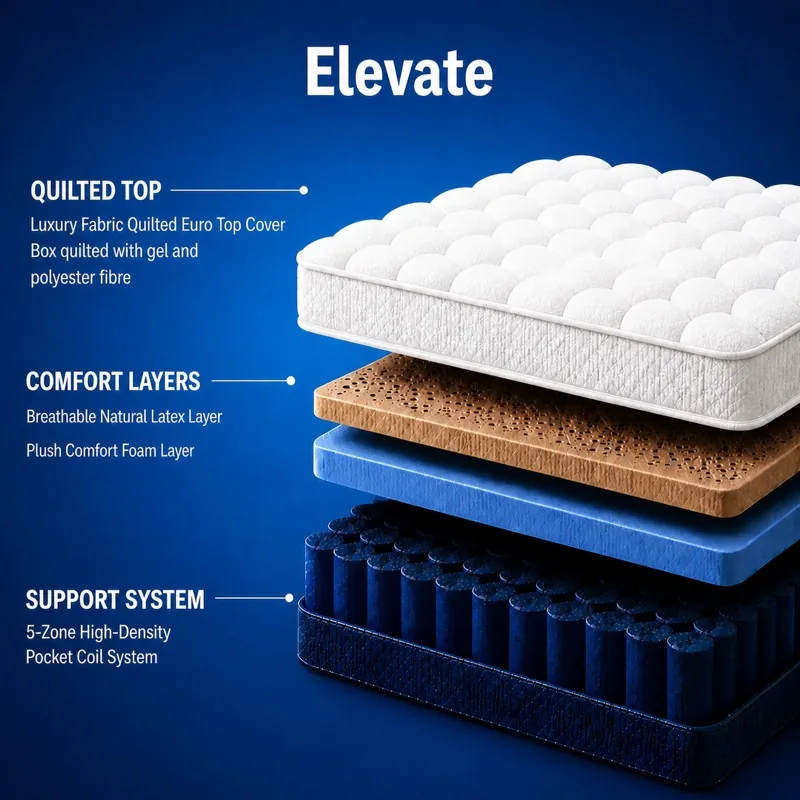
- Euro top: Elevate™ and Elevate Pro™. A quilted euro top, box-quilted with gel and polyester fiber, over a natural Dunlop latex layer and a 5-zone pocket coil system. Elevate™ is 12 inches and medium (6/10); Elevate Pro™ is 14 inches and medium-firm (6.5/10), with an added lumbar support layer and reinforced edges.
- Pillow top: Attune™ and Attune Pro™. A copper-infused fabric pillow top, quilted with polyester fiber and foam, over memory foam comfort layers and a foam-encased 5-zone pocket coil core. Both are 14 inches; Attune™ is medium (6/10) and Attune Pro™ is medium-firm (6.5/10).
If you want the soft, cushioned first touch of a pillow top, start with the Attune™; its foam-encased coil core also keeps the perimeter supportive under that plush layer. If you prefer the same kind of cushioning with straight, squared-off edges, the Elevate Pro™, our pick, pairs a euro top with a medium-firm feel and reinforced edges. If you would rather sleep on a smooth, even surface, the Ground™ is the place to begin. Every model uses CertiPUR-US certified foams and a polyester fire barrier, with no fiberglass.
Choosing a Top for the Way You Sleep
There is no best top, only the one that suits you. Work through these:
- If you sleep mostly on your side and like to feel cushioned, a euro or pillow top gives the shoulders and hips a soft layer to settle into. A euro top keeps that softness even across the bed.
- If you change position often, a tight top is easier to move on, because you lie on the surface rather than in a deep layer of fill.
- If you sleep warm, look at what the top is made of, not just its style. A thick layer of fiber fill is one more layer between you and the air, while breathable knit covers and gel- or copper-infused fabrics are designed to help.
- If you sit on the edge to dress, or share the bed, a euro top's squared border holds its shape better than a pillow top's stepped edge. How firm the edge feels overall still depends on the core.
- If you cannot decide, a tight top with a quilted cover is a gentle middle ground: a little softer at first touch than a plain knit cover, without the deep layer of a euro or pillow top.
Feel is easier to judge over a few weeks than in a few minutes on a showroom floor. Take 120 nights to decide (we ask for at least 30 to adjust). If it's not the one, we'll pick it up and refund your purchase, minus a $99 return fee. Details are on our sleep trial page.
The Bottom Line
Tight, euro, and pillow tops are three answers to one question: how much cushioning sits between you and the mattress, and how it is attached. A tight top is smooth and close to the layers below, a euro top builds in plush cushioning with straight edges, and a pillow top sits on top for the loftiest first feel. Quilting is a finish any of them can have, not a type of its own. Pick the core for support, pick the top for the surface you like, and check your sheet depth before the mattress arrives.
Compare Every Sleepy Edge Model →Frequently Asked Questions
Is a euro top softer than a pillow top?
Not necessarily. Both add a cushioned layer, and how soft either feels depends on the fill and on the mattress underneath. Pillow tops often use looser, loftier fill that gives a softer first touch, while a euro top's layer is usually more even from edge to edge. Compare the whole bed rather than the label.
Can you flip a pillow top or euro top mattress?
Usually not. When the extra layer is on one side only, the other side is the support base, so flipping would put you on the wrong layers. Rotate it head to foot instead and follow the care instructions; for a Sleepy Edge mattress that means every two weeks for the first six months, then every two to three months.
What does "tight top" mean on a mattress?
A tight top has no extra padded layer sewn onto the surface. The cover is stretched snugly over the comfort layers, so the bed feels smooth, flat, and responsive, and you feel the foam or latex underneath more directly. Tight tops are common on all-foam mattresses.
Do euro top mattresses need deep-pocket sheets?
Often, because the built-in top adds height. Measure from the bottom of the mattress to the highest point of the top, then buy fitted sheets with a pocket a little deeper than that, so the corners stay tucked. A mattress protector adds a little thickness too.
Can a mattress topper make a tight top feel like a pillow top?
It can come close. A removable topper adds a cushioned layer you feel first, and you can wash its cover or replace it if it flattens. The trade-offs are that it can slide without straps and it raises the bed, so check your sheet depth.
Do pillow top mattresses sag faster?
The soft fill in any plush top compresses with use, and the seam where a pillow top joins the mattress is a common place for a dip to show first. Shallow impressions are normal: the Sleepy Edge warranty considers body impressions of 1½ inches or less normal and covers deeper ones when the mattress has proper support. Rotating regularly helps the fill settle evenly.