Most people shop for a mattress in the wrong order. They start with a brand they have heard of, a price they want to stay under, or a model a friend owns, and only then try to work out whether it suits the way they sleep. Working the other way around is faster and far less likely to end in a return. Start with your own body and habits, narrow down the feel and the construction, check the practical details, and leave the product names for last. This guide walks through that order in seven steps, with a link to a deeper guide at each one if you want more detail.
The Quick Answer: How Do You Choose a Mattress?
Answer these in order, and the shortlist mostly writes itself:
- How you sleep: side sleepers usually want more cushioning at the shoulders and hips; back and stomach sleepers usually want a firmer, flatter surface.
- The feel you like: sinking in or resting on top, plush or firm. Brand firmness numbers are not standardized, so compare feel, not just the score.
- Construction: all-foam, hybrid (foam over pocket coils), or latex, each with a different feel, bounce, and airflow.
- Tie-breakers: sleeping warm, sharing the bed, and sitting on the edge each point to specific features.
- Size, materials, and terms: measure the room, check certifications and the fire barrier, and read the trial, return, and warranty terms before you pay.
Step 1: Start With How You Actually Sleep
Your usual sleep position shapes almost every choice that follows, because it decides where your weight presses into the mattress. The catch is that most of us are not sure how we sleep. When researchers fitted 664 working adults in Denmark with motion sensors for several nights, participants spent, on average, 54% of their time in bed on their side, 38% on their back, and 7% on their front, and the spread between individuals was wide.[1] In other words, most people are part-time side sleepers, and many change position through the night.
To find your own pattern, notice the position you fall asleep in and the one you wake up in, or ask a partner. Then use it as a starting direction, not a rule:
- Mostly on your side: your shoulder and hip carry most of your weight, so look for a comfort layer that lets them sink in a little instead of pushing back hard.
- Mostly on your back: a balance usually works best, with enough cushioning to feel comfortable and enough firmness that your hips do not sink well below your shoulders.
- Mostly on your front: a firmer, flatter surface helps keep your midsection from dipping into the bed.
- A mix of all three: look for a medium feel that is easy to turn over on, without a deep cradle you have to climb out of.
If back comfort is the main reason you are shopping, our guide to back support and sleep comfort goes through what the published research found about firmness, and where its limits are.
Step 2: Decide on a Feel Before You Look at Numbers
Firmness is what you feel when you lie down: how soft or hard the surface is. Almost every brand rates its beds on a 1 to 10 scale, but there is no industry standard behind those numbers, so a 7 from one company is not the same as a 7 from another. Use a brand's scale to compare models within that brand, and think about feel in plain words when comparing across brands.
Three questions narrow it down quickly:
- Do you like to sink in or sleep on top? Memory foam tends to give a slow, close "hug". Latex and coils feel quicker and more buoyant, so you rest more on the surface.
- How heavy are you compared with the average adult? Body weight changes how firm a bed feels. A heavier sleeper presses further into the comfort layers, so a medium bed can feel softer to them than to a lighter person.
- Do you prefer a smooth or a plush top? A tight, stretched cover feels flat and even. A quilted pillow top or euro top adds a soft, cushioned layer you feel first.
Keep in mind that a firm feel and good support are not the same thing. Support is how well the bed holds your body in a comfortable, even position, and it comes mostly from the core, not the surface. The back-support guide explains why support and firmness are different.
Step 3: Choose What It's Built From
Once you know the feel you want, the construction type tells you which mattresses are likely to deliver it. There are three broad families:
| Type | How it is built | How it tends to feel | Worth a look if you |
|---|---|---|---|
| All-foam | Layers of foam, with a dense support foam core | Even, quiet, little bounce; memory foam adds a slow contour | Want motion kept to your side of the bed, or like a smooth, uniform surface |
| Hybrid | Foam or latex comfort layers over a pocket coil core | More bounce and an easier time changing position; air moves through the coils | Change positions often, sleep warm, or want a more buoyant feel |
| Latex | A latex comfort layer over foam or coils | Springy and responsive; you rest on top rather than sinking deep | Like a lively surface without the slow sink of memory foam |
None of these is better across the board. The mattress type guide compares each construction in detail, including memory foam against hybrid head to head, and the mattress materials guide explains what each layer is actually made of.
Step 4: Weigh the Tie-Breakers: Heat, Motion, and Edges
If two mattresses still look equally good, these three questions usually separate them.
Do you sleep warm?
Dense memory foam can hold body heat, while coil cores let air move through the middle of the bed. Breathable covers, latex, and gel- or copper-infused foams are all used to help a mattress sleep cooler, though your bedding and room temperature matter just as much. Our guide on how to keep a mattress cool covers the whole picture.
Do you share the bed?
Look for motion isolation, which means a partner turning over or getting up is not felt across the bed. Foam absorbs movement well, and individually wrapped pocket coils move one at a time instead of as a single connected unit. Both are also quiet. For more on keeping a shared bed calm, see our sensory-friendly bedroom guide.
Do you sit on the edge?
If you sit on the side of the bed to get dressed, or two people need to use the full width, edge support matters. A reinforced perimeter or foam-encased coils keep the edge from collapsing when you sit or lie near it. Press down on the edge with your hand, or sit on it, and see how far it drops compared with the middle.
Step 5: Measure the Room, Then the Bed
Size is the easiest step to get wrong, because a mattress that fits the bedroom on paper can leave no space to walk around it. Measure the room, mark out the mattress footprint with tape, and check that drawers and doors still open. Then think about who uses the bed: one sleeper, a couple, or a couple plus a child or pet some mornings.
Height matters too. A taller mattress has room for more comfort layers, but it also raises the top of the bed and needs deeper fitted sheets. Our mattress size guide has a to-scale chart of every standard size, and the mattress thickness guide covers mattress height, total bed height, and sheet depth.
Step 6: Check the Label and the Certifications
Every mattress sold in the United States has to pass a federal open-flame flammability test, set out in 16 CFR Part 1633.[2] Brands meet it in different ways, usually with a fire barrier layer under the cover, and that barrier can be made of different materials, including fiberglass, wool, or polyester. If it matters to you, ask what the fire barrier is made of before you buy, and check the law tag once the mattress arrives.
Foam and latex certifications are the other thing to look for. CertiPUR-US certifies polyurethane foams for content and emissions, and GOLS certifies organic latex. Each covers a specific material, not the whole mattress, so read which layer a certification applies to. The materials guide explains what each certification tests for.
For reference: every Sleepy Edge mattress uses CertiPUR-US certified foams and a polyester fire barrier, with no fiberglass.
Step 7: Read the Trial, Return, and Warranty Terms Before You Pay
Lying on a mattress for a few minutes in a store, or reading about it online, only tells you so much. A sleep trial is how you find out what it is like after a few weeks of real nights, so the terms are worth reading as carefully as the specs. Before you buy, find the answers to these:
- How long is the trial? Count in nights, and note when it starts: on delivery or on the order date.
- Is there a minimum before you can return it? Many brands ask you to sleep on a new mattress for a few weeks first, because a new feel can take time to get used to.
- What does a return cost, and who arranges it? Look for a pickup or return fee, and whether you have to pack and ship the mattress yourself.
- What does the warranty count as a defect? Most warranties name a minimum depth for body impressions and exclude normal softening. Check whether the coverage is full or prorated, and for how long.
Our terms, for comparison: sleep on it for 120 nights. If it's not right, we'll arrange pickup and refund you, less a $99 return processing fee. The trial has a 30-night minimum before a return, shipping is free, and the 10-year warranty covers manufacturing defects and body impressions over 1½ inches. The details are on our sleep trial page.
Where the Money Goes in a Mattress
Price is a fair question at any point, but it is easier to answer once you know what you need. The things that usually add cost are a pocket coil core, latex layers, extra comfort layers and height, a quilted pillow or euro top, and zoned or reinforced support. Each is worth paying for only if it fixes something on your list:
- Coils earn their place if you sleep warm, change positions often, or want more bounce.
- A quilted top is worth it if you like a soft first feel; a back or stomach sleeper who wants a flat surface may not need one.
- Reinforced edges matter if you sit on the edge or share a smaller bed.
A higher price does not make a mattress right for you. The right one matches your sleep position, your preferred feel, and the tie-breakers from step 4, at a size that fits your room.
Turning Your Answers Into a Shortlist
With those steps done, here is where each Sleepy Edge model fits. Firmness is on our own 10-point scale, where a higher number feels firmer.
| If you | Start with | Feel (Sleepy Edge scale) | Construction |
|---|---|---|---|
| Sleep mostly on your side and like close contouring | Attune™ | Medium (6/10) | 14" hybrid, copper gel memory foam over 5-zone pocket coils |
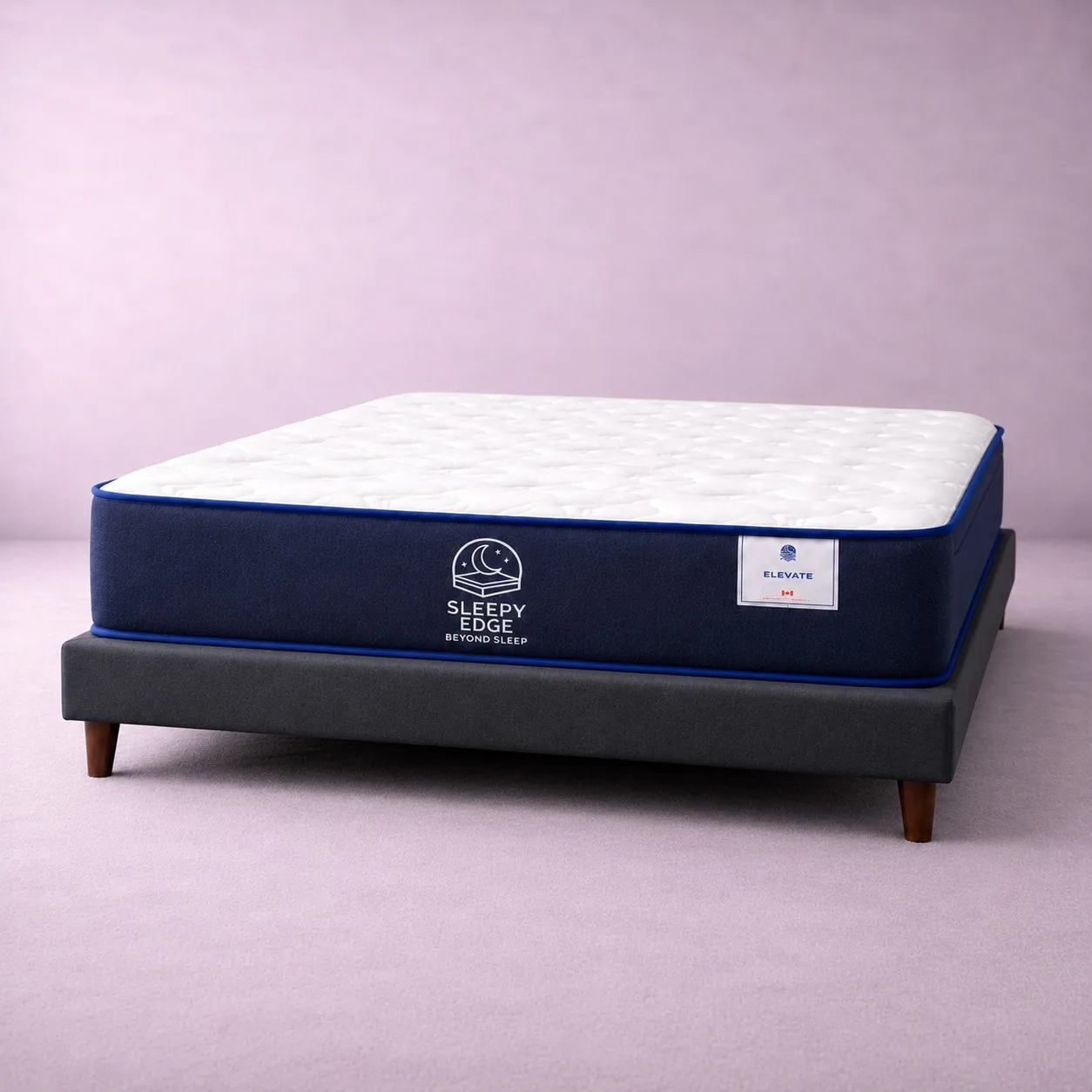
| Sleep on your side and prefer a plush, cushioned top | Elevate™ | Medium (6/10) | 12" latex hybrid with a quilted euro top |
| Share the bed, change positions or want a luxury hybrid | Elevate Pro™ (our pick) | Medium-firm (6.5/10) | 14" latex hybrid, euro top, lumbar support layer, reinforced edges |
| Share the bed and want premium contouring | Attune Pro™ | Medium-firm (6.5/10) | 14" copper-cooling hybrid with natural-fiber layers, reinforced edges |
| Sleep on your back or front and like to rest on top | Ground™ | Medium-firm (7/10) | 10" all-foam, cooling gel memory foam over a firm core |
| Sleep warm and like a firm, all-foam bed | Ground Pro™ | Firm (8/10) | 12" all-foam, cool gel memory foam over a high-resilience core |
If two rows describe you, start with the one that matches your sleep position from step 1, then let the tie-breakers decide. The full comparison lists every model's layers side by side.
The Bottom Line
Choose a mattress from the inside out. Work out how you really sleep, decide whether you want to sink in or rest on top, and pick the construction that gives you that feel. Let heat, a partner, and edge use break any ties, then make sure the size fits the room, the materials are certified, and the trial gives you enough nights to be sure. Brand and model come last, and by then the list is short.
Compare Every Model Side by Side →Frequently Asked Questions
What is the most important thing to consider when buying a mattress?
Start with how you sleep. Your usual position decides where your weight presses into the bed, which points you toward a softer or firmer feel and the right construction. Features like cooling, edge support, and price only matter once the basic feel suits you.
Is it better to buy a mattress online or in a store?
Both can work. A store lets you lie on a mattress for a few minutes, while buying online usually comes with a longer at-home sleep trial. A few minutes in a showroom rarely shows how a bed feels after weeks of real sleep, so whichever you choose, read the trial and return terms first.
How long should a mattress trial be?
Look for a trial long enough to cover several weeks of normal sleep after any minimum period ends. Many people need a few weeks to get used to a new feel, so a short trial may run out before you know. Also check the return fee, who arranges pickup, and whether the trial starts on delivery.
Is a more expensive mattress worth it?
Only if the features that raise the price matter to you. Pocket coils, latex, extra comfort layers, quilted tops, and reinforced edges all add cost, and each solves a specific need such as sleeping warm, sharing the bed, or preferring a plush top. A mattress that matches your sleep position and preferred feel is a better buy than a pricier one that does not.
What kind of mattress is good for combination sleepers?
Combination sleepers usually do well on a medium or medium-firm bed that is easy to turn over on. A hybrid with pocket coils or a latex layer responds quickly when you move, rather than leaving a slow impression to climb out of. Avoid very soft beds with a deep cradle if you change position often.
What is included in the Sleepy Edge sleep trial?
Every Sleepy Edge mattress comes with a 120-night sleep trial. If it is not right, we arrange pickup and refund you, less a $99 return processing fee, after a 30-night minimum. Shipping is free and every mattress has a 10-year warranty.
Sources
- Skarpsno ES, Mork PJ, Nilsen TIL, Holtermann A. Sleep positions and nocturnal body movements based on free-living accelerometer recordings: association with demographics, lifestyle, and insomnia symptoms. Nature and Science of Sleep, 2017;9:267–275.
- US Code of Federal Regulations. 16 CFR Part 1633: Standard for the Flammability (Open Flame) of Mattress Sets. Legal Information Institute, Cornell Law School.